SpaceX test site, McGregor, Texas
The Roadster left the ground.
Nine years after it was first shown, Tesla's second Roadster climbed a ramp on suction, hung upside down, and hopped a row of cars on cold-gas thrusters.
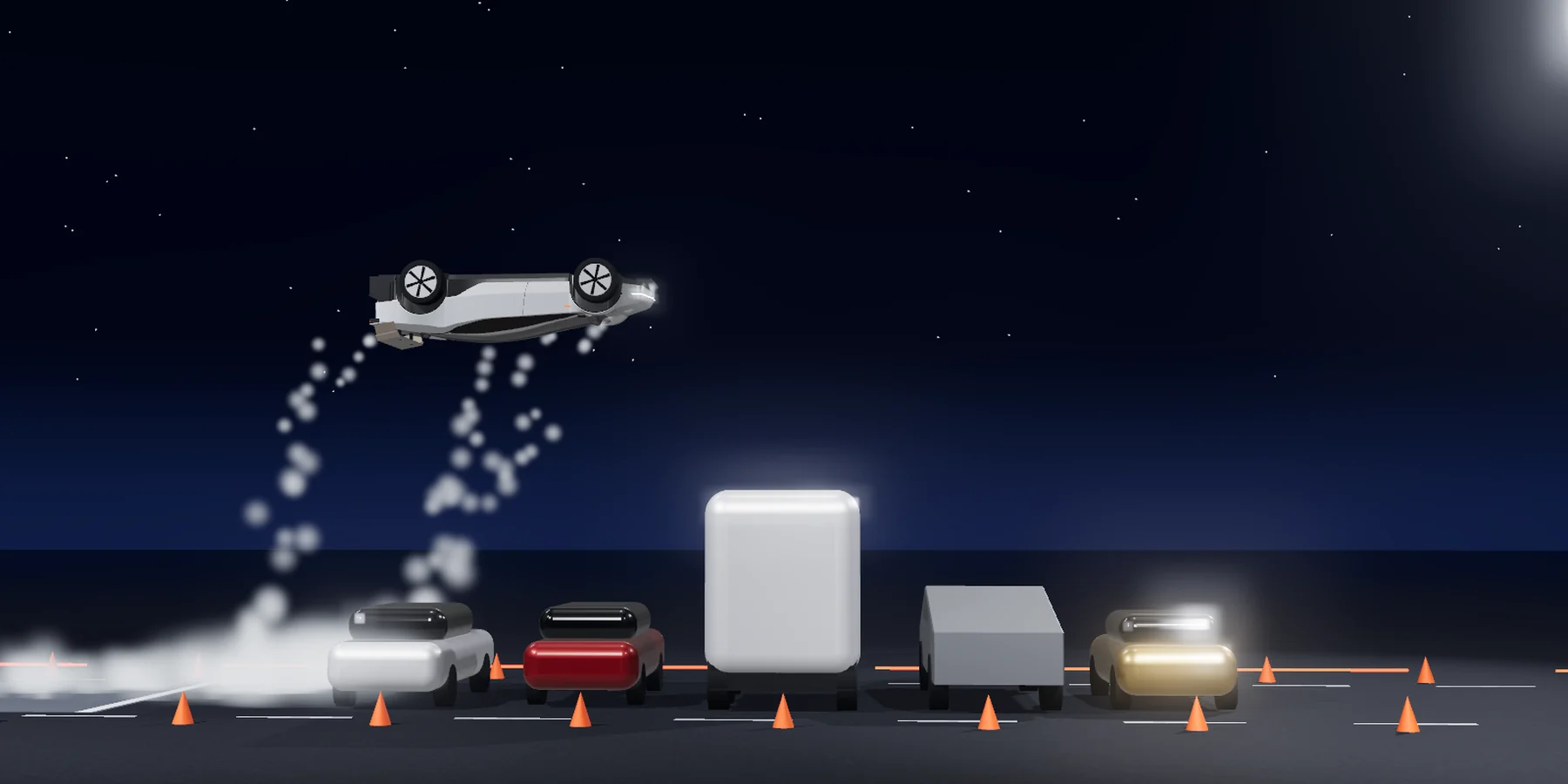
The car was operated remotely; no one sat inside for the stunts. Fans under the floor pulled it onto a curved ramp and held it there upside down. It let go, flipped, and set itself down on air jets. For the finale it launched over parked cars and a semi-truck with a roll in the middle, and landed clean on the far side.
The demo was real. Most of the numbers around it come from Tesla and Elon Musk, and none of them have been tested independently yet.
What the car did
-
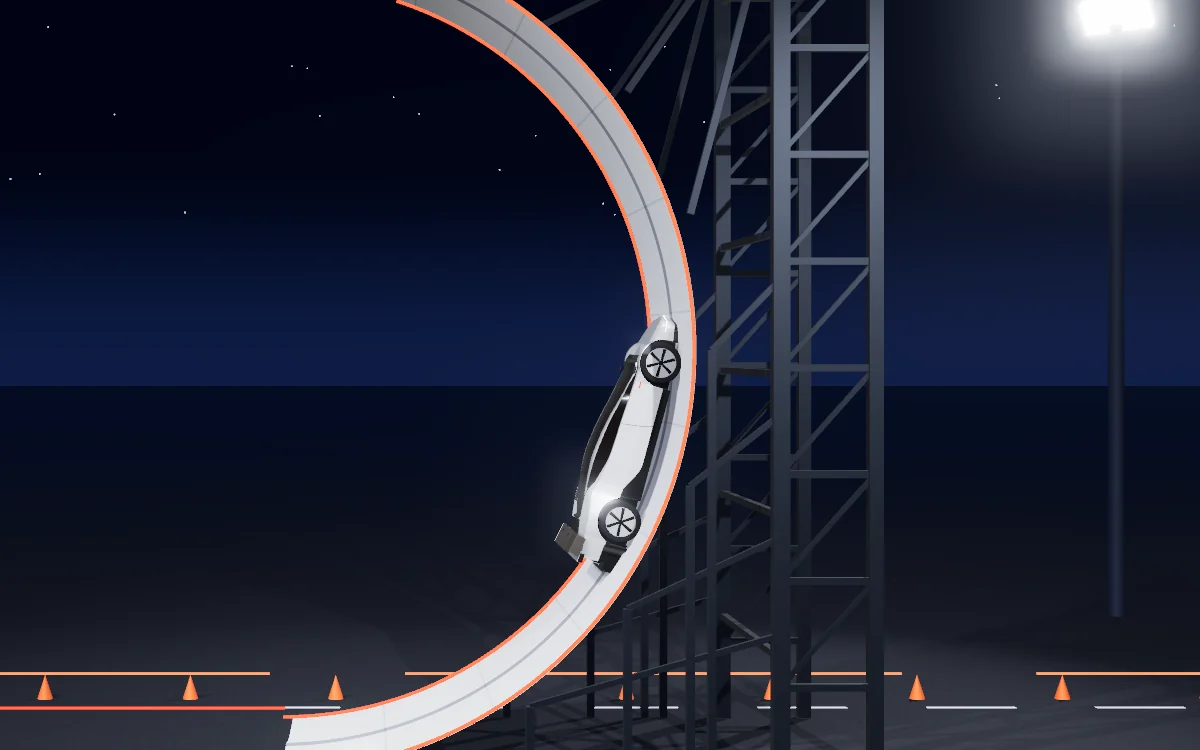
Up the wall on suction
Fans underneath pulled the car onto a steep curved ramp and kept it there past vertical.
-
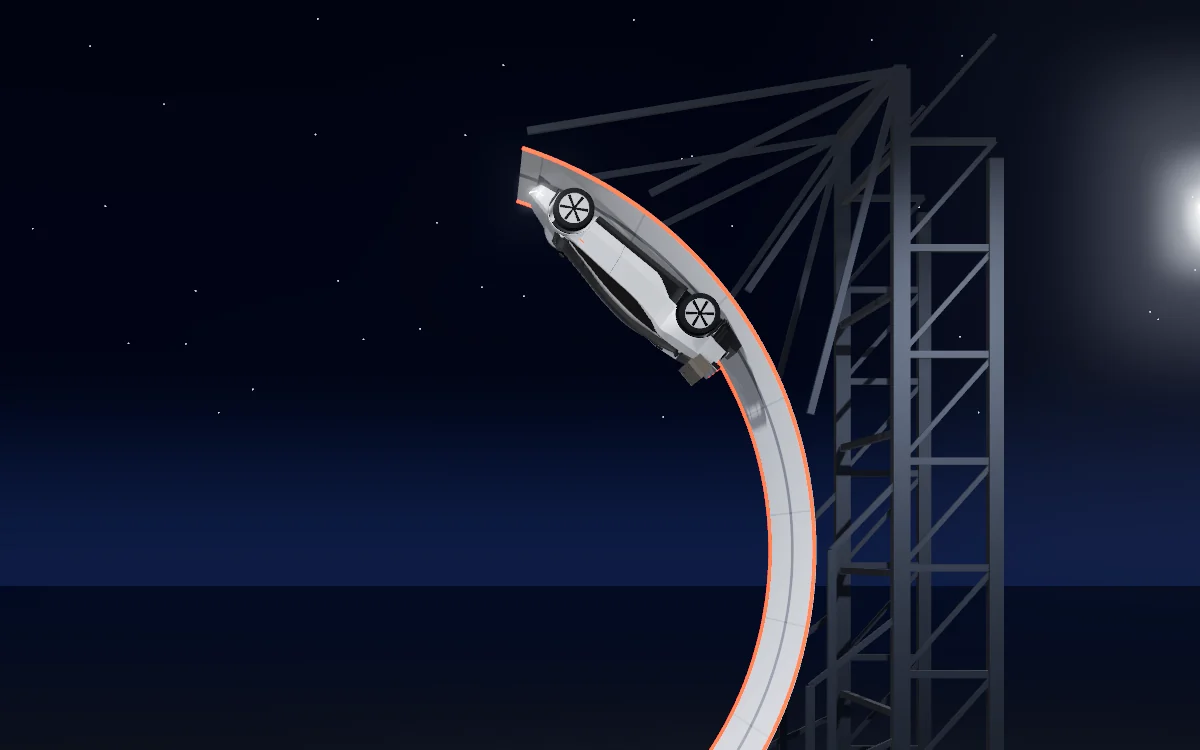
Upside down at the top
The suction held it inverted, about 12 m up, before it crept on to the end.
-
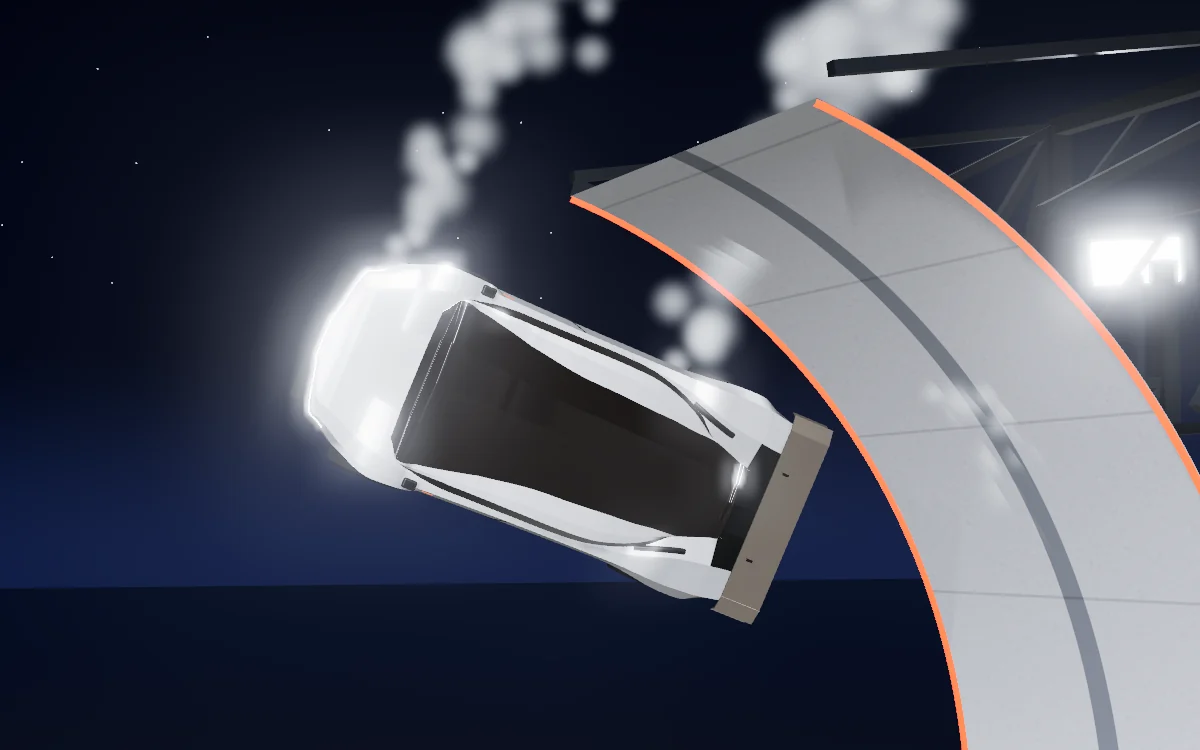
Off the end, flip, land
It tipped off, rolled half a turn, and lowered itself to the ground on its jets.
-
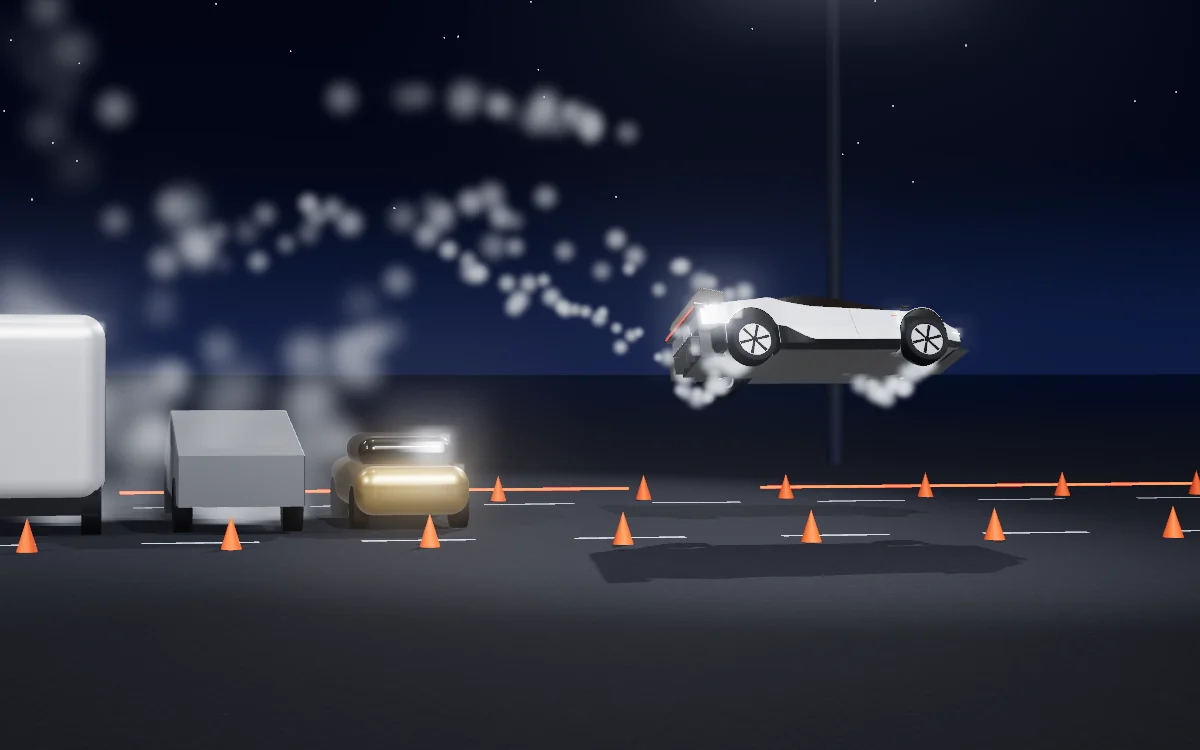
Over the lineup
The finale: a hop over the parked cars and a semi, a roll in mid-air, and a soft landing.
How short is 0.59 seconds?
Each car covers 0–60 mph in its claimed time, played at real speed.
Three trims, stacked
Thrust and Rocket are add-ons to the Performance car, each building on the one before.
- +Track only
Rocket
The full package. Tesla's own page reportedly says it is not approved for public roads.
- +
Thrust
Adds the cold-gas thruster system for launches and handling.
- Base
Performance
The two-seat sports car itself.
Seen, and still to prove
Seen on the night
- A car climbing a ramp on suction and hanging upside down
- A thruster-assisted hop over cars and a semi, with a roll
- Three trims named: Performance, Thrust and Rocket
Not shown yet
- Sustained flight. This was a hop.
- A person driving it through the stunts
- An independent test of the 0.59 s figure
- A price, a production date, a street-legal Rocket
Nine years to liftoff
The original Roadster goes on sale. It is Tesla's first car.
The second Roadster is revealed as a surprise at the Tesla Semi event, with a claimed 1.9 s 0–60.
Musk's own first-generation Roadster rides a Falcon Heavy into orbit around the Sun.
Musk teases a "SpaceX package" with about ten small cold-gas thrusters.
The October 1 unveiling is called off for weather; Tesla says the show can only be held outdoors.
The unveiling at a SpaceX test site in Texas. The car leaves the ground.
Musk has pointed to production starting in 2027. Tesla has not confirmed a date or a price.
Your turn
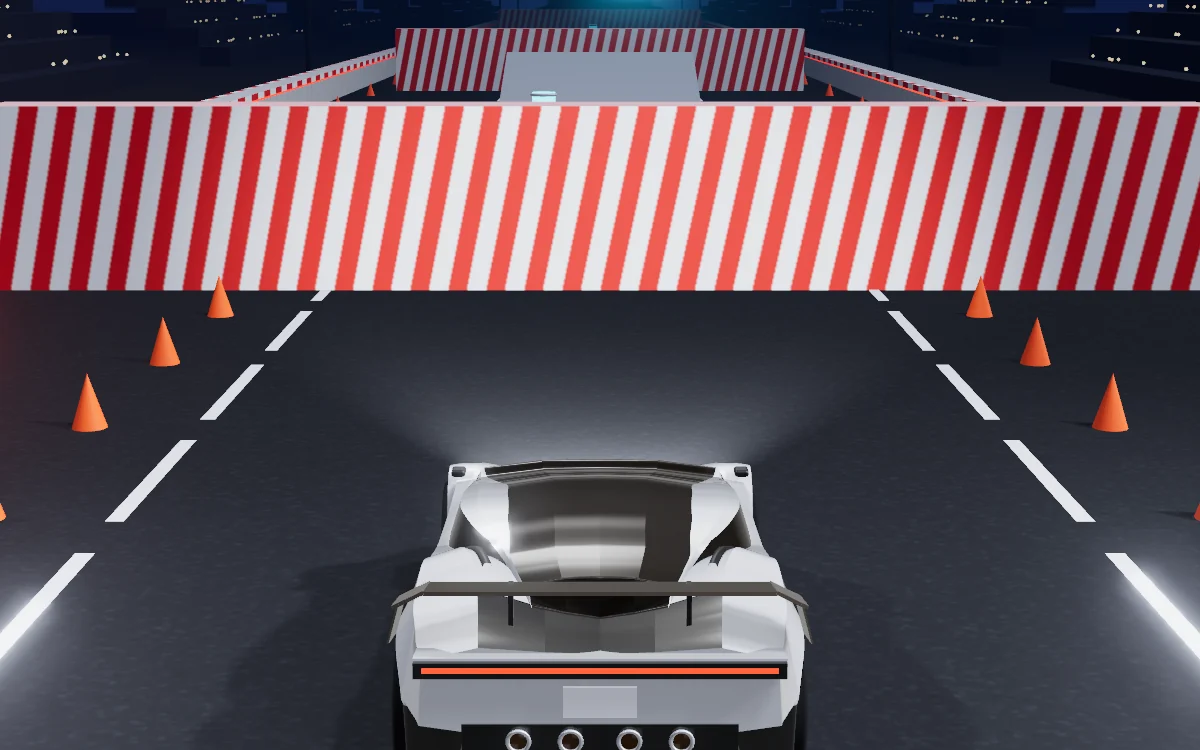
Fly both stunts yourself, or race a random night course: bust crates, jump walls, flip in the air.
Play Roadster LiftoffHow the simulation works
Everything on the other page is computed, not animated by hand. Masses and thrusts are our estimates.
A 1,900 kg body on four springs
A rigid body with its own inertia for roll, pitch and yaw. Each wheel has a spring, a damper and a tyre that grips up to 1.15 g.
Ten nozzles, each pushing from its own spot
Four under the floor (up to 18 kN each), four in the diffuser, two in the nose. Firing one side harder turns the car. Valves take about 40 ms to respond.
A flight computer for the demos
It lifts off, rolls, cancels sideways drift, holds the heading with the nose jets and follows a glide path down to about 2 m/s.
Suction for the ramp
Fans pull the floor toward the wall with up to 30 kN, 1.6 times the car's weight, which is enough to drive past vertical and stop upside down.
Sound made from the numbers
Nothing is recorded. Motor whine follows wheel speed, the hiss follows total thrust, valves pop as they open and landings thump.
Track Mode wing
Road, High-Downforce and Low-Drag, as in Tesla's video. Each mode changes the downforce in the physics.
Coverage
- CNNTesla unveils what it says is a flying car
- ElectrekTesla unveils Cyberfied new Roadster that can kickflip
- ElectrekRoadster event set after nearly 9 years of delays
- DezeenTesla launches flying Roadster concept car
- Fox BusinessNew Roadster takes flight at SpaceX facility
- WikipediaTesla Roadster (second generation)